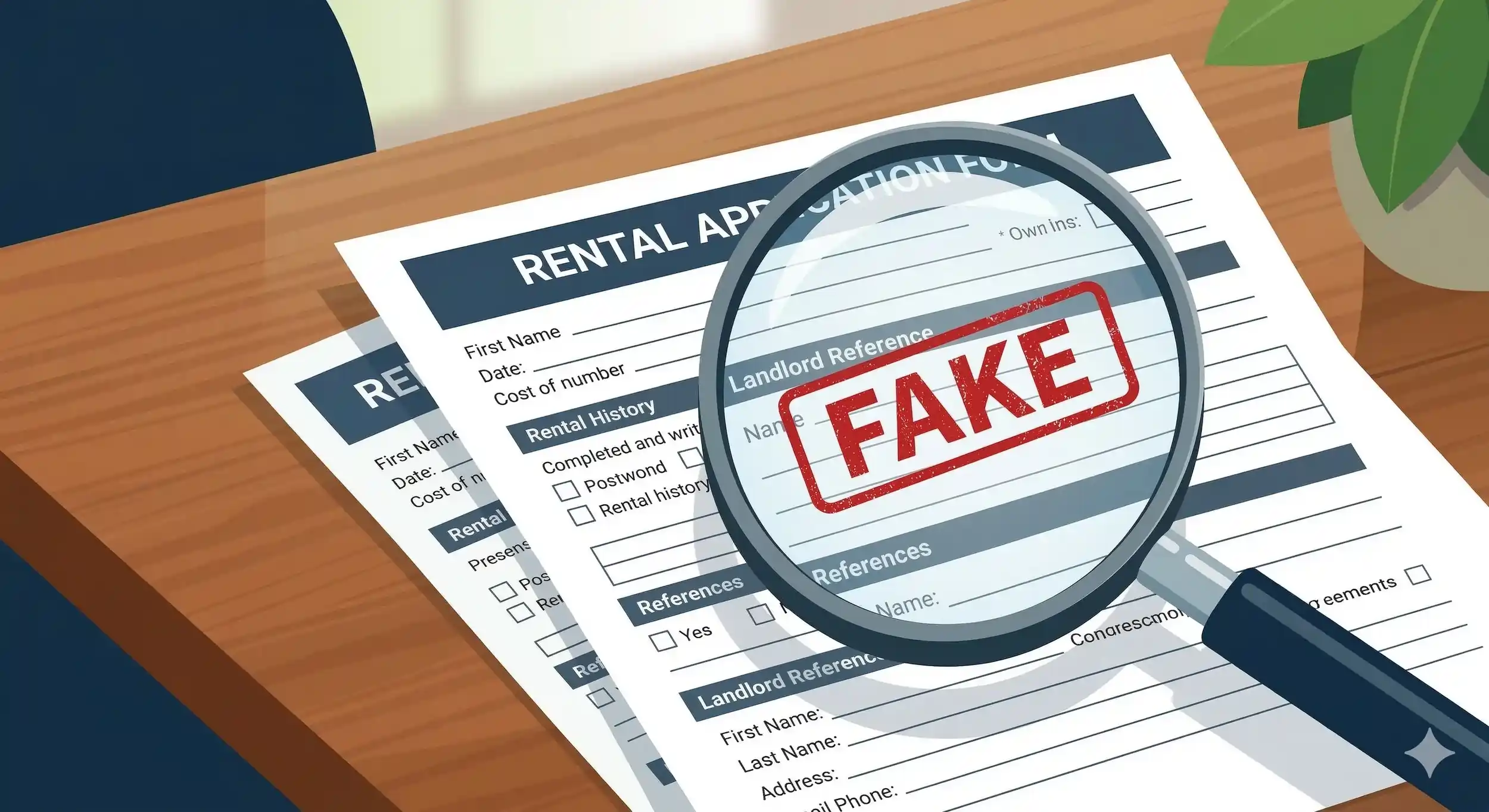
Dealing with fake landlord references is a real headache for property owners. It happens when an applicant asks a friend, family member, or a paid service to pretend they used to manage their old rental. Often, renters use this trick to hide a difficult rental history, like late payments, serious property damage, or past evictions.
Keep your investment safe by catching these fakes early. Taking the time to verify property ownership records, ask the right questions during reference calls, and use professional screening tools can save you from taking on a high-risk tenant.
What is Driving the Rise in Rental Application Fraud?
With today's cutthroat rental market, finding a great place to live is incredibly tough—especially for renters who have a bumpy credit history or a past eviction. Because it's so hard to get approved, we're seeing a massive and alarming spike in rental application fraud. According to recent industry surveys by national property management associations, nearly 97% of property management companies have experienced some form of rental fraud, with fake references and manipulated pay stubs being among the most frequent offenses.
When applicants face stringent qualification criteria, some resort to "professional" reference services. There is a growing underground industry of websites where tenants can pay a fee to have a trained actor answer phone calls and verify a fictitious rental history. These services hand applicants everything they need to trick an unsuspecting landlord—fake leases, forged rent receipts, and even a local phone number to answer your reference calls.
Why should this be on your radar? Because letting in a tenant with a fake reference completely derails your screening process. If an applicant lies to get approved, they're highly likely to skip rent or cause damage once they have the keys. Spotting these fakes is non-negotiable if you want to keep your business profitable.
Red Flags of a Fake Reference
How can you tell if you’re talking to a real landlord or just the applicant's friend? Listen for the subtle clues:
-
They Don't ‘Sound Like a Business’: Real property managers answer professionally ('Smith Property Management'). If the person on the other end answers with a hesitant 'Hello?' or seems startled when you mention the applicant's name, put your guard up immediately.
-
Lack of Specific Property Knowledge: Real landlords know their properties inside and out. They know the exact rent amount, the lease terms, and the property layout. A fake reference will often stumble, hesitate, or give vague answers if you ask highly specific questions about the unit.
-
Overly Enthusiastic Praise: Legitimate landlords are usually cautious, factual, and strictly professional. They will confirm dates of residency, rent amounts, and whether the tenant paid on time. Nothing like the "perfect review”: Real landlords are usually objective. If the reference has absolutely nothing bad to say, sounds way too enthusiastic, or talks about the applicant like they are best friends, that's a major red flag.
-
Mismatched Timelines: Do the move-in and move-out dates from the reference actually line up with the applicant's credit report or background check? Scammers usually slip up on the fine details, creating overlapping or confusing timelines.
-
Sketchy Contact Info: If the phone number has an out-of-state area code that doesn't match the rental location, or if it's an internet number (like Google Voice), you need to dig a little deeper. Also, keep an eye out for painfully obvious email addresses instead of a standard business domain.
How Do You Verify a Previous Landlord’s Identity?
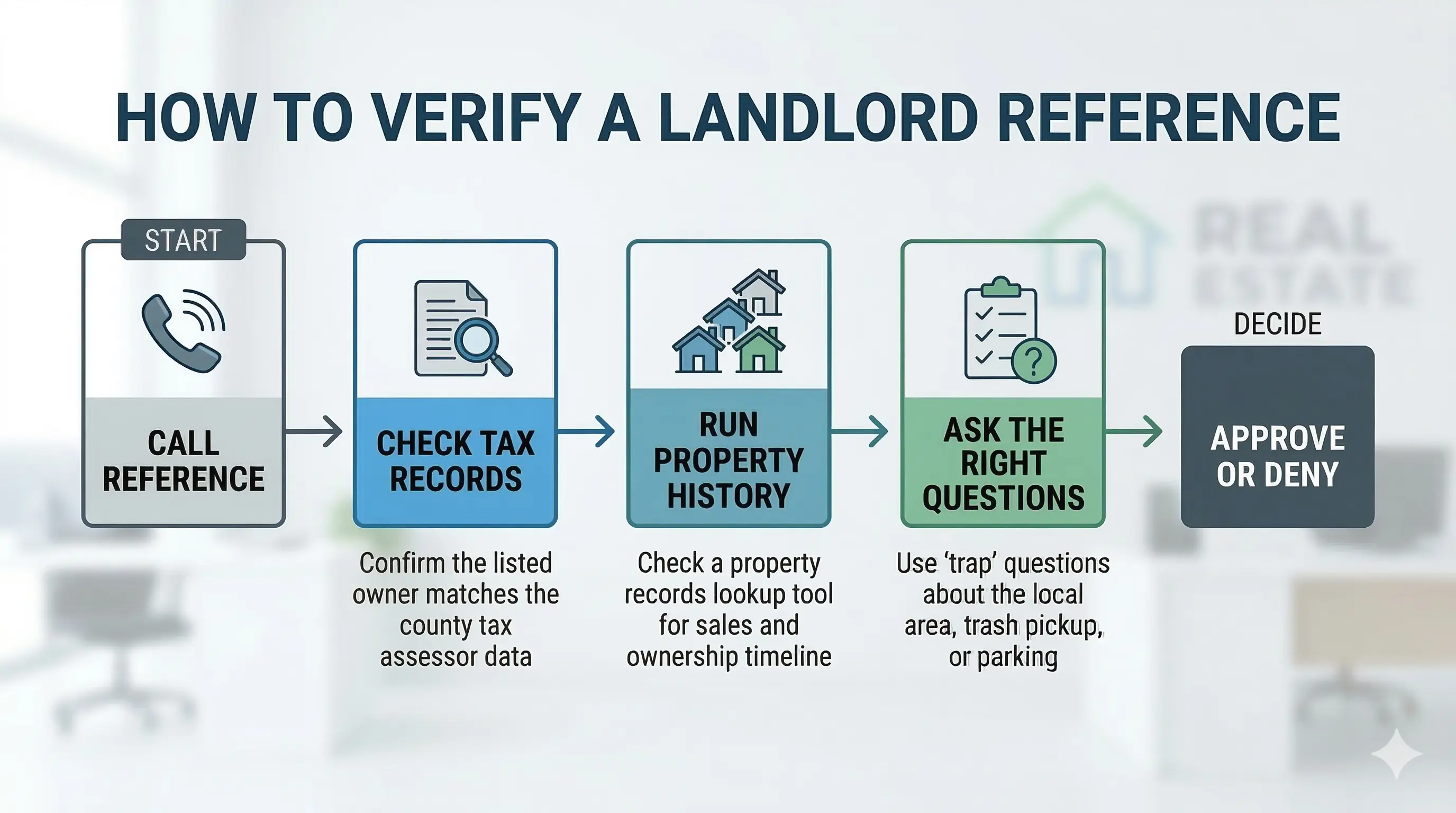
What steps should landlords take to verify a rental reference? You cannot simply take an applicant's word for it. You must conduct independent verification before picking up the phone. Here is a definitive, step-by-step process to ensure you are speaking with the actual owner of the property.
1. Check the Tax Assessor's Database
Before you dial the phone number provided on the application, look up the address of the previous rental. Every county has a tax assessor's office, and most of this data is available online. Search for the property address to see the name of the registered owner or the corporate entity that holds the deed. If the name on the application does not remotely match the public tax records, you immediately know something is wrong.
2. Cross-Reference Ownership Records
Sometimes, county assessor sites are outdated, difficult to navigate, or obscure the true owner behind a complex LLC. If you suspect the person on the phone is not the actual property owner, you can easily verify the truth. By running the applicant's previous address through a property records lookup, you can instantly see the legal name of the registered deed holder, review recent sales history, and match it against the reference provided. If the public record shows the property is owned by an investment firm, but the applicant listed their friend "Dave" as a private private landlord, you have uncovered a lie.
3. Ask the Right "Trap" Questions
When you get the reference on the phone, do not just read down a standard checklist. Ask questions that only the real landlord or property manager would know.
-
"What day does the city pick up the trash at that property?"
-
"Did they park in the designated driveway or on the street?"
-
"I see the rent was $1,500, is that correct?" (State an intentionally incorrect amount to see if they correct you).
-
"Are utilities included, or did they pay for water separately?"
If the person on the phone stammers, guesses incorrectly, or sounds ‘flustered’ by these localized questions, they are likely a fake reference.
4. Request Documentation
If you are still unsure after the phone call, ask the reference to provide proof of their relationship with the tenant. A legitimate landlord will not have an issue emailing you a copy of the lease agreement or the tenant's payment ledger. A fake reference will suddenly become unavailable or make excuses as to why they cannot produce these basic business documents.
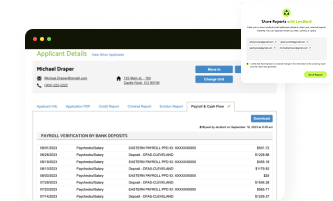
What Tenant Screening Tools Prevent Application Fraud?
How can professional tools eliminate the guesswork of spotting fake references? While manual verification is a critical part of due diligence, it is inherently time-consuming. Relying solely on phone calls leaves room for human error. To truly protect your property, you must pair manual checks with comprehensive digital screening tools.
Conduct Thorough Background Checks
The most reliable way to verify an applicant's housing history is through professional screening. By running a comprehensive tenant background screening, you gain access to an accurate address history trace. This report shows you every address officially associated with the applicant's credit profile, utility bills, and public records. If the applicant lists a previous address on their rental application, but that address never appears on their official background check, they are likely trying to hide their true residential history.
Utilize Official Eviction Data
Why do applicants use fake references in the first place? Almost always, it is to hide a prior eviction. A fake landlord will gladly tell you the tenant was perfect and always paid on time. However, court records do not lie. Running an official eviction check is the best way to uncover the real story. Because evictions are public civil court records, it doesn't matter if an applicant makes up a landlord's name or lies about their past addresses. A nationwide eviction search cuts through the noise, scanning court databases to reveal any hidden filings, judgments, or past evictions tied directly to their name and Social Security Number.
Analyze the Credit Report for Hidden Addresses
A credit report provides much more than just a three-digit credit score; it is a chronological timeline of financial responsibility. When reviewing the report, look for addresses tied to collection accounts. It's incredibly frustrating to pull a credit report and find a collection account from a past apartment that the applicant 'forgot' to mention. When that happens, you know they're hiding something.
Handling the Rejection
Finding out an applicant lied is disappointing, and your next step is to deny them. However, it's so important to handle the rejection legally to protect yourself.
The Fair Credit Reporting Act (FCRA) says that if you deny someone based on a background or credit report, you have to send an Adverse Action Notice. But if you're rejecting them specifically because they faked a reference, you can usually rely on your own documented screening rules. For your own peace of mind, make sure your written criteria clearly state: 'Any false information or fraudulent documentation will result in immediate denial.'
Summary and Key Takeaways
Due diligence is the most critical phase of property management. Taking an extra 15 minutes to verify a reference can save you months of stress and thousands of dollars in eviction costs down the line.
-
Always Be Skeptical: Do not take phone numbers and names on an application at face value.
-
Verify Ownership First: Always confirm the legal owner of the previous rental property through public records before calling the reference.
-
Ask Trap Questions: Test the reference's knowledge of the property with specific, localized questions that a friend or paid actor wouldn't know.
-
Rely on Hard Data: Use comprehensive tenant screening, background checks, and eviction reports to cross-reference the applicant's claims.
-
Maintain Strict Criteria: Stick to your established E-E-A-T (Experience, Expertise, Authoritativeness, and Trustworthiness) principles. Ensure your rental criteria explicitly state that falsified applications lead to automatic denial.
By combining human intuition with authoritative public records and professional screening software, landlords can confidently spot fake references and secure reliable, high-quality tenants for their properties.
Disclaimer: The information provided in this post is intended for general informational and educational purposes only. It should not be construed as legal, accounting, or tax advice. For guidance specific to your situation, we recommend consulting with a qualified professional in the relevant field before taking any action based on the content provided.